

The Rock Gospel
Rocking is our business, and business is good
Thank you for confiding in me.
Teaching has been great. I love the opportunity to connect with ya'll through music and drums. If you know me you know how much I love music, and I'm happy to share this with ya'll. I've been wanting to make this website for a while because some people are hesitant to sign up for a lesson without knowing where to start, and lately I have been worse and worse about responding to messages online. This will give you something to reference before scheduling with me. I also have been wanting to give more insight to everyone that has ever gotten a lesson from me before. Thank you! It's hard to give the proper acknowledgement for everything important in 1-2 hours.
I love to yap, but don't want to do it so much online anymore, but feel more than happy to do it for ya'll. I will treat this as blog where I discuss all kinds of topics related to drumming. As time passes I will keep adding on here. Please feel free to reach out anytime about anything. If you have a question the chances are high that I will be more than happy to talk about it and maybe even post about it on here. If not through text message then to dr.marioofrock@gmail.com
Happy practicing!
-Mario
Learn to use your fingers!


Like Chubb's told Happy Gilmore that golfing is "all in the hips" Sir Mario is telling you that drumming is all in the fingers.
Well... it’s not ALL in the fingers, but it is the foundation. It is your first point of contact with the stick.
The less fingers you use, the less contact you have with the stick. The less contact you have with the stick then the less you’re choking the sound. Depending on what you need to play, decide how much power you need. More fingers equals more power. Think of it like switching gears while driving a manual transmission.
1st gear- Index
2nd gear- Index and middle
3rd gear- index, middle, and ring
4th gear- index, middle, ring, and pinky
During all of these, your thumb is always pressing on the stick. If you need more power than all of the fingers then use wrist, and if that isn't enough then use your whole arm. Whatever it takes to portray the energy you need to give.
The more strength and balance/control you develop with your finger and the stick, the more you can afford to play with a relaxed hand that will produce a more pleasant sound. You want to avoid tensing up on the stick because you will strain yourself, and because then you’ll produce a harsher sound than necessary
The moment I knew for myself that I accomplished getting decent technique through my fingers was when I rocked a small room with a strong sound that felt loud and filled up the room, to then afterwards have people in the audience told me that they we’re able to enjoy the performance without earplugs and without feeling like their ears took a beating. This is mainly accomplished with having good finger technique. You don't want to play so harshly that you drive people away because of how it hurts their ears. I've seen it happen so many times. We need to control ourselves according to the room.
Practice switching between different gears. Start slow. You’ll lose balance, slide around the stick, and bounce around uncontrollably. Just keep adjusting and starting over. If you’re like me then this exercise will be boring and hard to patiently do for awhile. I thought it was a waste of time at first, but came around years later and realized how important it was. I have much more insight on this exercise, but I would rather tell you as I'm walking you through the exercise during a lesson if haven't had one yet. This is one of the fundamental exercises for playing with good technique
The different kinds of strokes
You gotta know them
Full stroke- When you hit the drum and bring the stick back to wherever you started. Full stroke
Tap stroke- When you tap the drum and then keep the stick in a resting position close to the drum head. Tap stroke
Down stroke- When you hit the drum from a sarting position to then keep the stick down closer to the drum head. Down stroke
Up stroke- When you lift the drum stick to a higher position after tapping the drum. Up stroke
Buzz stroke- Buzz stroke
Get comfortable switching between extremities to achieve great control
Loud and quiet. Hard and soft.
When people ask me how I have so much control with my hands I credit most of it to this exercise that I’m about to share.
You simply alternate between down strokes and up strokes!
As simple as it sounds, the true effectiveness of this exercise can only be achieved if you really strive to make the down strokes as strong as you can while controlling it to set you up to make the up stroke as quiet as possible.
You’re developing overall strength and twitch muscles in your hands with this exercise. As with anything else, start slow if you’re finding yourself struggling to get a night and day difference between the two extremities. Make them both sound so incredibly different. Reach for both ends of the spectrum. When you get comfortable switching between the two you will demonstrate true control. This is an easy exercise to practice along to music. This exercise is a great tool that we can easily use to gain the ability to shape the dynamic of the music as drummers. If the gap between how loud and quiet you can play this exercise is not very wide then you know that you need to slow down give yourself more time to practice widening the gap.
Alternating between HARD down strokes and SOFT upstrokes


Rimshots/bass drum beater angle
You gotta give the music that extra edge to make the experience more memorable
Especially if the instruments are amplified and you’re playing in a band that wants to play LOUD and STRONG in order to leave an impact. I can’t tell you the number of times I’ve seen a band that sounds great, but it is falling short of their potential because the drummer is not cutting through sonically compared to the rest of the band. Brute force helps, but playing strong is more of a matter of being in tune with the physics of hitting rim shots, bass drum, and cymbals right.
THE SNARE
-
Needs to have solid rim shots on the back beats or whatever the pulse is. A more timid drummer that hasn’t taken the time to figure this out is usually playing directly on the drum head. This simply won’t cut through a loud band.
-
If you are gonna play rim shots, practice them so that you can do it with ease without sounding harsh. I can’t tell you how many times I’ve also seen drummers that force their rimshots too much to the point where they sound harsh and unpleasant. You don’t have to bury your stick into the drum, it chokes the sound. Practice them.
Here’s some examples of rim shots vs playing directly on the head. Even if you are playing loud on the head, you are still missing that extra edge.
Playing directly on the head vs playing rim shots
Here’s an example of me playing them with a loud band. I would not be cutting through to the audience without them.
THE BASS DRUM
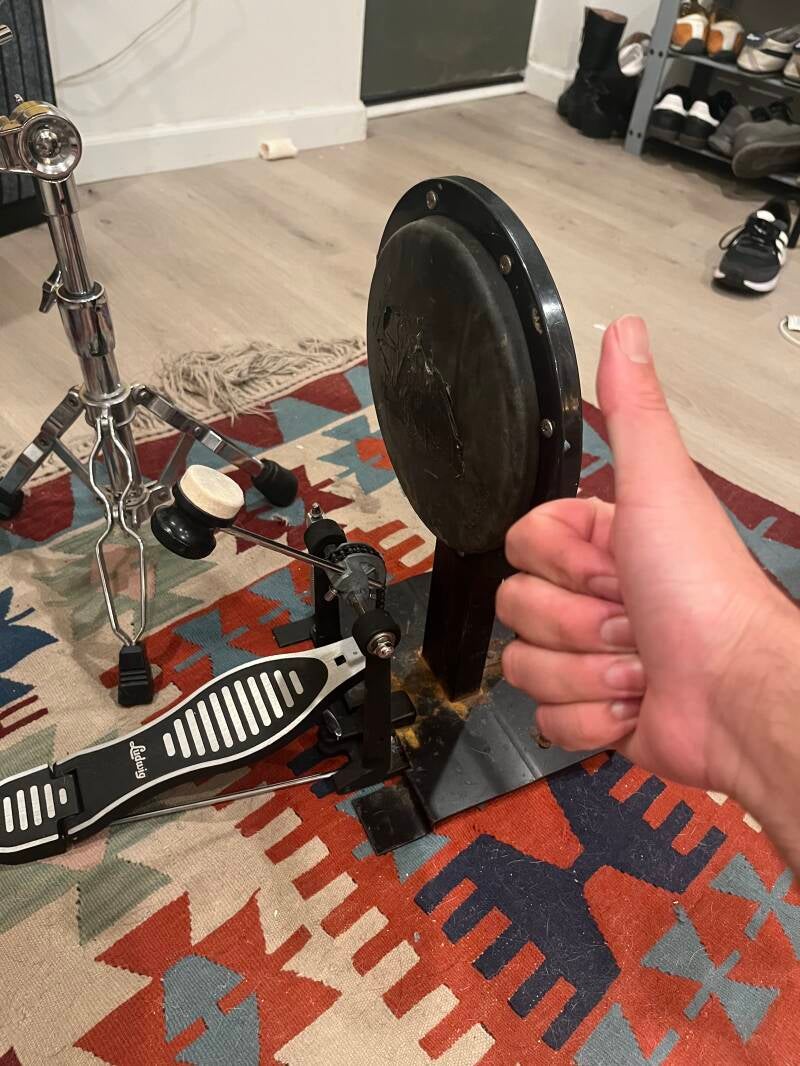
So many times, I’ve witnessed a drummer having trouble cutting through because they have their beater set up too close to the drum. Give yourself headroom and pull the beater back. It might make you feel like you’re losing speed, but if you get used to the way it feels you can easily get that speed back. Once you try it, you’ll notice how much easier to control the timing of hitting the bass drum with the beater when it’s pulled back. You’re giving yourself head room to play louder and cut through loud amps. If you pull back too much you will hit your shin when trying to play loud. This will hurt and be a sign that you need to get better at controlling the pedal or setting it up a little closer to the head.
When you practice feathering the bass drum you engage your twitch muscles in your leg and figure out how to use them to control the pedal to play softer, even if it is pulled way back. This is another obstacle we overcome in order to have dynamic control on the kick drum.

Articulation/Fluidity
We want to get our message across, so we practice how we articulate.
Here are two key exercises to becoming more articulate.
-
Take two rudiments and play them back-to-back against each other along to a metronome to hold you accountable to consistency. When you become consistent at keeping the spacing even, while alternating between the two rudiments you are demonstrating articulate phrasing fluidity. If you find yourself playing one rudiment cleaner and more consistent than the other then you know which rudiment you need to spend more time on, the one you are playing sloppier.
Here’s a basic and very practical example. I look at a list of rudiments and I pick ANY two. In this case I decide to pick the “single stroke roll”, and the “double stroke roll”. So, I switch back and forth between both of those rudiments while aiming for consistent spacing and fluidity
.Single stroke/ Double stroke roll
-
Take what you got from the previous exercise you've created and play it on top of ANY ostinato you decide to play with your feet. In this random example I'll choose to play a samba pattern on the feet. The feet hold your hands accountable and visa versa. When things don’t align it becomes much more obvious how you need to articulate everything. Slow it down until you figure out the coordination.
Here’s me doing that same example from the previous exercise over a samba pattern on the feet.
Single stroke/double stroke roll over a Samba pattern on the feet
The more vocabulary you can go back and forth between playing in your hands, while playing patterns with your feet will help you articulate the language of drumming more fluidly. Not only because you gain more knowledge of using vocabulary fluently, but because you are increasing your coordination skills.
Rudiments




They're the vocabulary we use in the language of drumming
Single stroke roll- Is the most practical to use. Even playing simple single strokes can elevate a drummer that doesn’t know much vocabulary to play a performance with the flare necessary to make it great. You’re simply alternating between the left and right hand.
Double stroke roll- It’s an easy way to play fast which makes this rudiment the most fun in my opinion. It is also very practical, but requires more practice to use articulately in the context of music than a single stroke roll, especially if you’re having to play it on different surfaces/instruments. Learning to control the double to get consistent even spacing is the goal. Right, right, left, left, right, right, left, left… Left, left, right, right, left, left, right, right
Paradiddle- is helpful for moving around. Learn all of them to have true freedom moving around.
-
Single paradiddle - Single Paradiddle
-
Double paradiddle - Double Paradiddle
-
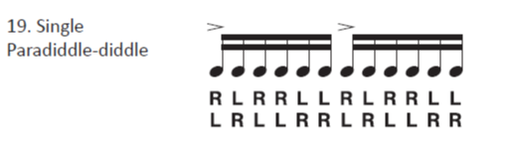
Right hand paradiddle diddle - Right hand Paradiddle diddle
-
Left hand Paradiddle diddle - Left Hand Paradiddle diddle
Flam rudiments- All of these rudiments will broaden your sound, and give you coordination and knowledge for playing non linear drum parts.
- Flam - Flams
- Flam Tap - Flam Tap
- Inverted flam tap- Coming soon
- Flam Accent - Flam Accent
- Swiss Amy Triplet- coming soon
- Ratamacue- coming soon
Triple Stroke Roll - Triple Stroke Roll
3's - 3’s
Cheese-coming soon
Flam drag- Learn "Flam accent" first. Coming soon.
Have a good attitude and have fun
We have it good, and it can only get better from here if we practice a little everyday.
The art of articulating rhythm becomes more fun the more we learn how to do it. That's what I look forward to everyday. Don't be afraid to learn. Gaining coordination through learning how to articulate rhythm is healthy for you. In gaining chops you can afford to convey more energy in your message. Keep figuring it out.
Find fun ways to practice/ Push yourself at least once a day
This will ensure success.
I get most of my practice done while watching TV. It's the best. Just picking some kind of vocabulary or anything to do over and over again after I figured out how to play it slow, in the back ground while I catch up on something.
Playing on grass, floors, pillows, underwater, fun surfaces etc.. It teaches you to adapt, and gives your hands chances to use different muscles. Playing on soft surfaces builds a lot of strength.
Push yourself to pick any rudiment and max out on playing it as loud/fast as you can for as long as you can. Keep it going untill you fall apart. You will build facility this way.
I will share soon more of me maxing out on different language!
Splits as vocabulary/chops
Here's a list of different splits you can use as vocabulary
Here are some of the more practical ones
Although this is the most basic of all the splits, it will build coordination more than any other. In my opinion this one is the most difficult. It takes practice to get the coordination necessary to play this evenly
RKRK, LKLK, RKLK, LKRL
This one is so useful for rock fills, and playing over all linear chops. This one is not hard to do once you get the hang of playing good double with your bass drum. Just make sure they're even.
Possible sticking's- RLKK, LRKK, RRKK, LLKK.
This one is very practical for fills. This one takes patience to get down.
Possible sticking's- RLK, LRK, RRK, LLK
Accent a beat with your hands while you fill in the space with your bass drum.
Sticking's- RKK, LKK, BKK
This one is very useful for shredding in a stylish way that fits most music!
Sticking's- RLRLKK, LRLRKK...... If you get confident with doubles try RRLLKK or LLRRKK
Here are more that are good to know
This one is just like the last one (3:1) except I wrote it out this way so that you can visualize the bass drum on the down beats.
Take ANY two of them and figure out how to put them together to create an exercise. Refer to the earlier article called "Articulation/Fluidity". Here's a simple example where I take 1:1 and 2:2 and play them back to back, aiming for consistency.
Proper Setup


You want to be comfortable while being able to get the most out of the instruments you're playing
You want to be able to comfortably sit up straight and get all possible dynamics. It takes discipline and effort to sit up straight. If you are constantly hunching over, you'll have to live with back pain. Having to constantly deal with that kind of pain is difficult. I know because I hunched over a lot when I played as a young adult. One thing that helped me learn how to sit up straight is doing leg presses at the gym. Squats are also good. Anything that gets you in the habit of engaging your glutes. Engage your glutes in that same way while you're drummin'!
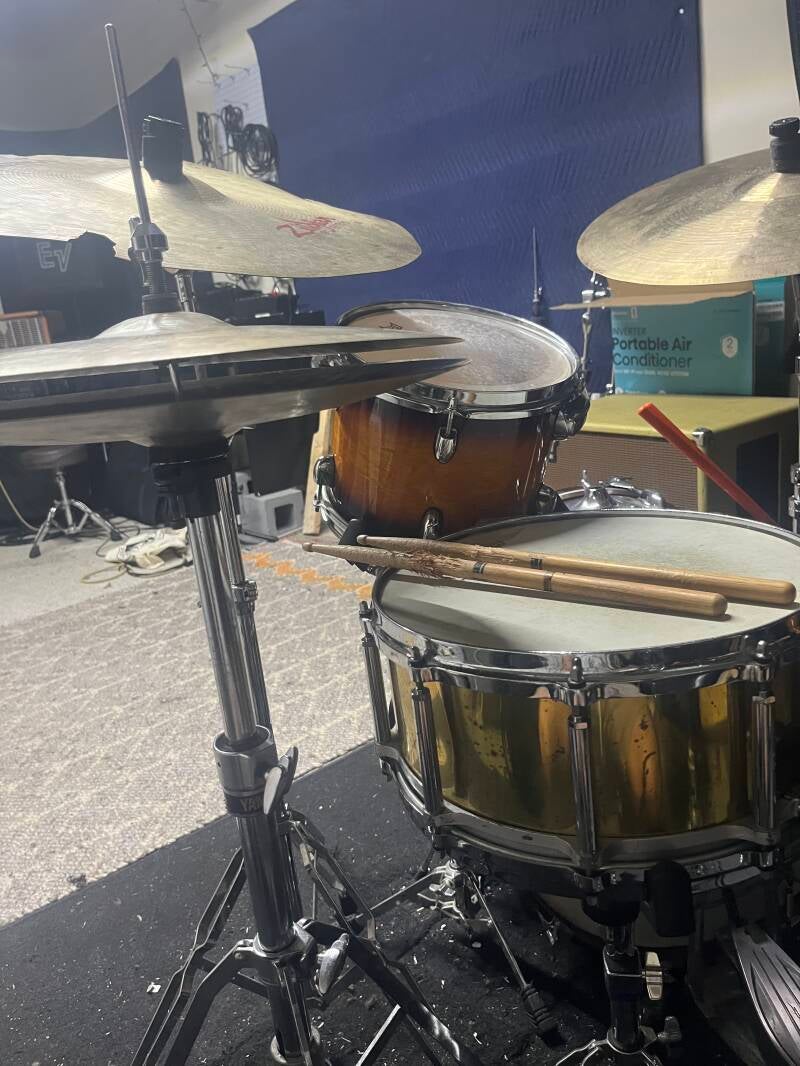
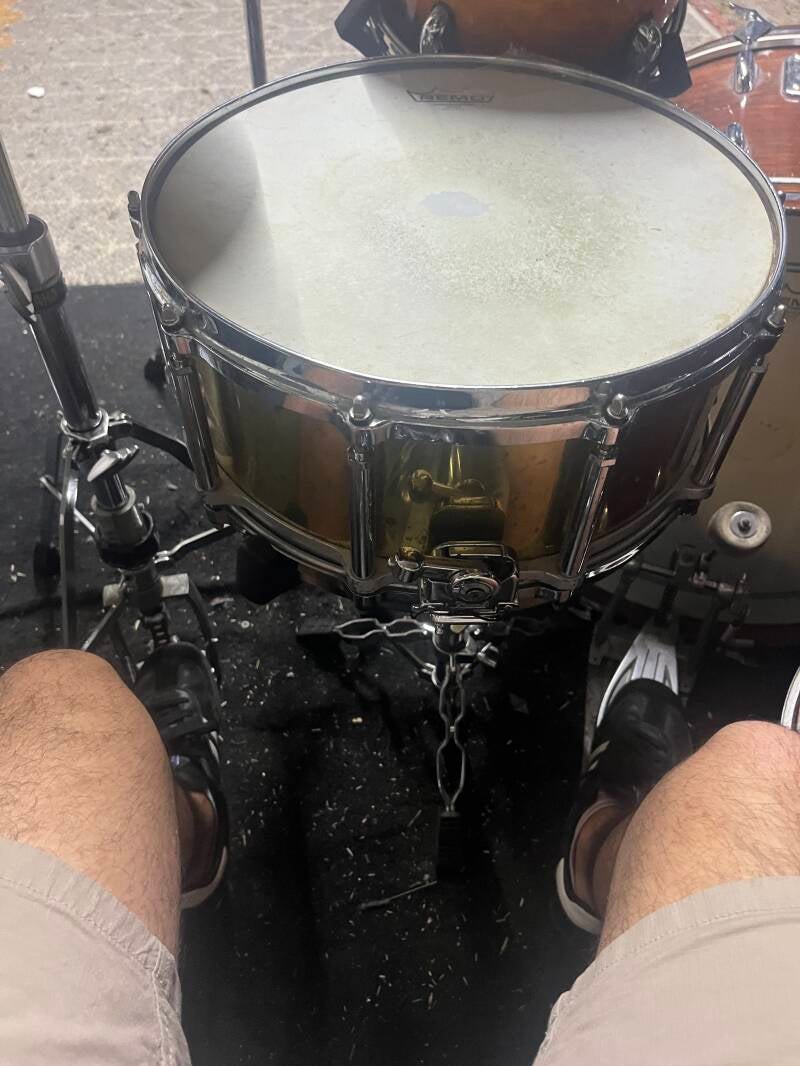
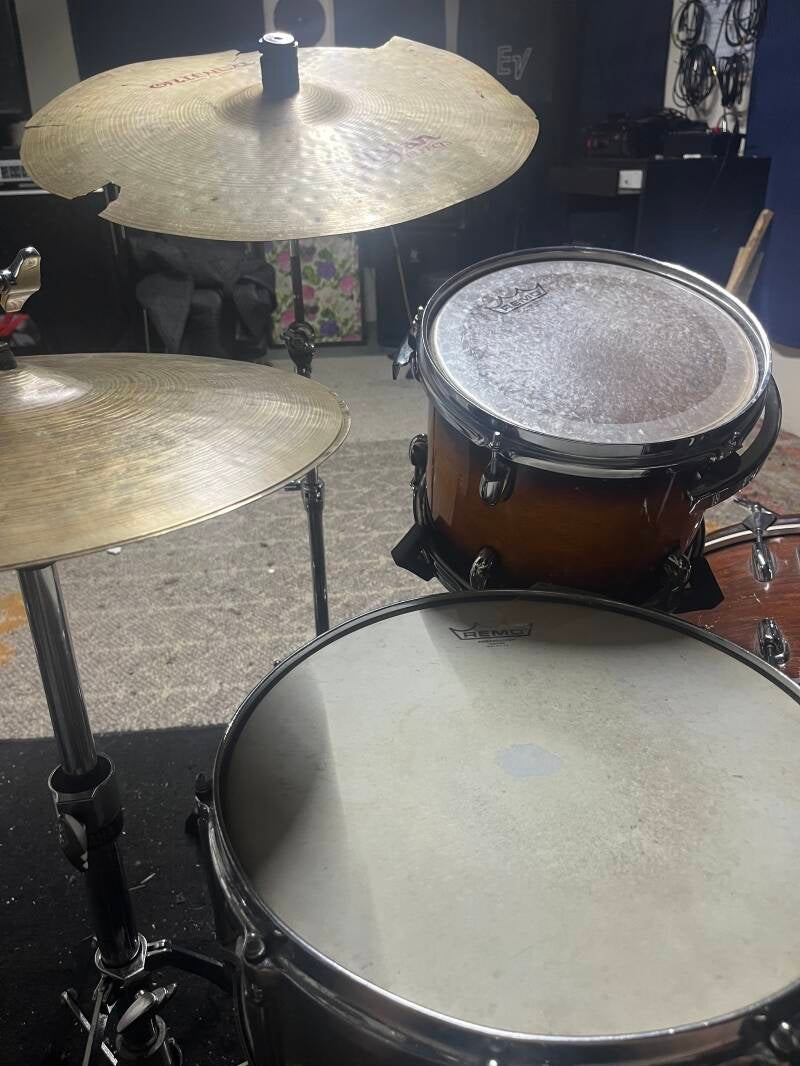
Snare/Hi-Hat- You don't want them to be so low that you can't get a rim shot on the snare, or a good crashing motion on the hi hats, or where you're hitting your stick on your thighs.
You don't want them so high that you have to be straining constantly to reach them.
You don't want the instruments too close together height wise. If they're set up too close together then your hands are going to keep running into each other because they won't have space to move. This makes it hard to crash the hats while hitting loud/rimshots.
You also don't want them to be too separate from each other height wise. If you do then you're making it hard for yourself to move around between the two.
You want the snare set up where you can easily play rim shots and also on the head, while being able to move comfortably to the rest of the kit.
Sitting- You don't want to sit so low that it makes it difficult to sit up straight because the knees are too bent. You also don't want to sit so high that it feels difficult for your feet to reach the pedals. If you can't rest your feet comfortably on the floor, then you'll have more strain put on your back. If you slouch, then you look like a slob and cheapen the experience. Don't slouch too much.
SET UP, BREAK DOWN, AND GET OUT OF THE WAY FAST
Or else people will resent you. It's easy to want to take your time, but drums take up a lot of space, so we got to keep them out of the way. If you play out, you will see so many drummers don't care for time and spatial awareness. It's hard to take them seriously. Your friends will tempt you to take a long time to get off stage with all of their praise, or they will tempt you to procrastinate setting up for an opportunity to hang out. Respectfully let them know that you have matters to attend to.

Here are all good examples of a set up where I can move between the hi hats and snare with ease and have the snare high enough where I can easily hit rim shots.
What heads/sticks to use
Depends on what your skill level is and what sound you need. It helps to set yourself up to get a good rebound that you can easily control and work with to use to your advantage.
STICKS
If you're new to drumming, then you want to start with a standard 5A drumstick because it is the most average in size. If you have bigger hands than average, then you might want to do something bigger/heavier like a 5B or 2B.
If you're playing quieter/softer music, then a smaller stick like a 7A can help you accomplish so with more ease.
Lighter/smaller sticks will help you move around with more ease.
Heavier/bigger sticks will help you get more rebound that is easier to control. They can also help you get more volume with ease, which can be very helpful if playing in a loud band.
Use VERY big sticks like marching drum sticks to get a good work out at home and build strength.
HEADS
The best choice is always a single ply drum head on the batter side like a "Remo Ambassador". Because you're only playing on a single ply you will get more rebound than a double ply head. Always use the rebound to your advantage.
"You can take something lively and deaden it, but you can't liven up a dead sound." Is what Tommy Robinson taught me while I was working at Tommy's Drum shop. This is why we pick the "Remo Ambassador" or an equivalent as the batter side drum head. With only a single ply you can get a lively tone with this kind of drum head. You can dampen it with moon gels, tape, your wallet, or any device that can be used to deaden the sound. Every room is different. Different styles of music call for different tones. Something that is too lively in the wrong setting can sound harsh. Something that sounds too dead in the wrong setting sounds weak. Adjust accordingly...
If you know that you like to play loud with bad technique, play with some kind of double ply head for its durability.
Playing with a double ply head will never give you the great lively tone or the rebound of a single ply head, but it can give you a fatter and deeper tone that can sound great for certain styles of music. You can also get deep tone from a single ply head if you use a device like "big fat snare drum" for example.
I will share more on this! There are so many different heads. Please feel free to ask any questions.
Thoughts on playing out socially
No matter what we're confronted with, love learning and be grateful to learn.
It's important to be professional to the extent where people know they can rely on you, but don't feel like you have to act professional to where it takes away from you having fun, or where you become too upset to go with the flow and adapt when things don't go your way, which will happen often the more you pursue music endeavors. There are so many musicians and a lot of them are very unreliable people that will often bring drama with them. Problems are inevitable, but we avoid them so that we can have more time to dedicate our love of learning to the language of drumming.
There are so many reasons to play music with so many different people. Sometimes I like to entertain people, so I just play with them to give them the experience. Sometimes I get a chance to play with a musician who's work I admire. Maybe I get offered the right amount of money to play a gig I'm just psyched enough about. Whatever the reasons are, there's always been something to learn. But after learning, I always felt more comfortable saying yes or no to those same kinds of opportunities later down the road, because I already understand them. The more I got to say no, the more I got to shed on my own, which is always a great thing. No matter what opportunity you're presented, be humble and just glad that you get to share the moving energy of playing drums. Let the music speak for itself.
If you haven't experienced the type of opportunity that you are confronted with then it is worth considering if it's worth doing but be mindful of your time. Learn and know what red flags to look for.
If you're like me, you will be so glad that you got to spend a lot of time practicing when life hits you with things that keep you from playing drums. Make good use of those times you get to shed.
After you set up all the gear, and before you play your set, take a moment to play the thing you're best at. Belt it out!! This will grab people's attention so that they can consider tuning in to the experience you're about to provide. For me personally it's simply playing a double stroke roll. My MEAN double stroke roll speaks for itself... After playing something epic to grab people's attention, step away to "do something" for 30 seconds to a minute. Maybe you'll decide to get water, or take a leak, but even if you have nothing to do because you know to think ahead and be ready, use the short time you have to get youself in the zone while the audience anxiously awaits to see what's next..
Now of course... there will be a special kind of performance that this would be inappropriate in, like when you're drumming as part of a performance that already has hype and suspense brewing before it due to other factors. In that case don't even worry about it.
The point of practicing is so that we can play every note with conviction without working ourselves out of the zone of comfort.
Record all your performances. There may be some great moments you can share, but more importantly it will give you a chance to listen to yourself and be honest about what you need to do next.
Some people require more patience to deal with and just know that learning patience from those kinds of people/situations is also helpful to drumming. Sometimes a lot of us want to just play and move our hands and feet out of excitement, so we play when it would serve the musical situation better to just wait until the right time to play. When it's your time, do your part confidently with your own twist/flavor/style. This is why we listen. For when the chance comes, to serve new situations in the spirit of everything that is good, in harmony, since we will be a part of them whether we like it or not.
If you are going to go against what I say...
It's alright with me as long as you are genuine. If you are confiding in getting information out of me...
I will just share it and have faith that it will be helpful. I also take note of some legends that have a completely different approach than mine that I don't see eye to eye with, but that I still appreciate and respect their messages. Whatever it takes to get your message across in a genuine way is great. I am not perfect myself. You will see me break rules every once in a while. That is usually when I surrender to the music in a way where I can afford to throw technique out the window. I usually will pay the price afterwards in a physical way where I'm sore. Sometimes it is worth it. They do keep adding up though, and I'm just trying to do my best to be able to play drums for as long as I can which involves taking care of our bodies. That is why I'm always open to learning about how to optimize in achieving this. Experience helps. I will not take it personally if you disagree with me. We're all learning from each other in many ways whether we like it or not. We gotta know what's out there, and we all play a role.
Practice tips
Little things to help keep you wanting to grow.
Our time here will eventually come to an end... Take advantage of whatever nimbleness you're feeling right now, and put it to drumming. You will be grateful that you did.
Have music ready to queue for each different style you want to play. For an exercise you intend to play repeatedly have a good song in mind or in the back ground. This will help you connect to the ideas in a more meaningful way. Play something in the conext of some music. I will share more examples soon that I love to use.
- Flat tire shuffle- Mi'ihen Highroad (FINAL FANTASY X Original Soundtrack) 【Audio】
- Swing- Blaze Foley Sittin' by the road
- Overall triplet based ideas- Forest Temple - The Legend of Zelda: Ocarina Of Time
- Medium paced straight playing- Woo "1001 Decisions" (Official Video)
- Fast paced straight playing- NBA Hangtime OST - It's Showtime (No Lyrics)
The grid
Know your way around.
COMING SOON
Tuning
Trust your ears, but also know what's up!
COMING SOON
Pick the right texture
Read the room. Look at the rest of the ingredients. What else is involved?
COMING SOON
Splitting rudiments amongst limbs
You will use vocabulary from the last article, but now from the perspective of using rudiments
COMING SOON
Writing/Learning drum parts
Thoughts on contributing to music in different situations.
COMING SOON
Using cheeses to broaden your sound on the kit
They're easy to use on one surface, but it takes a more adventurous approach to apply them to the kit!
COMING SOON
Create Your Own Website With Webador